Tenant workspaces
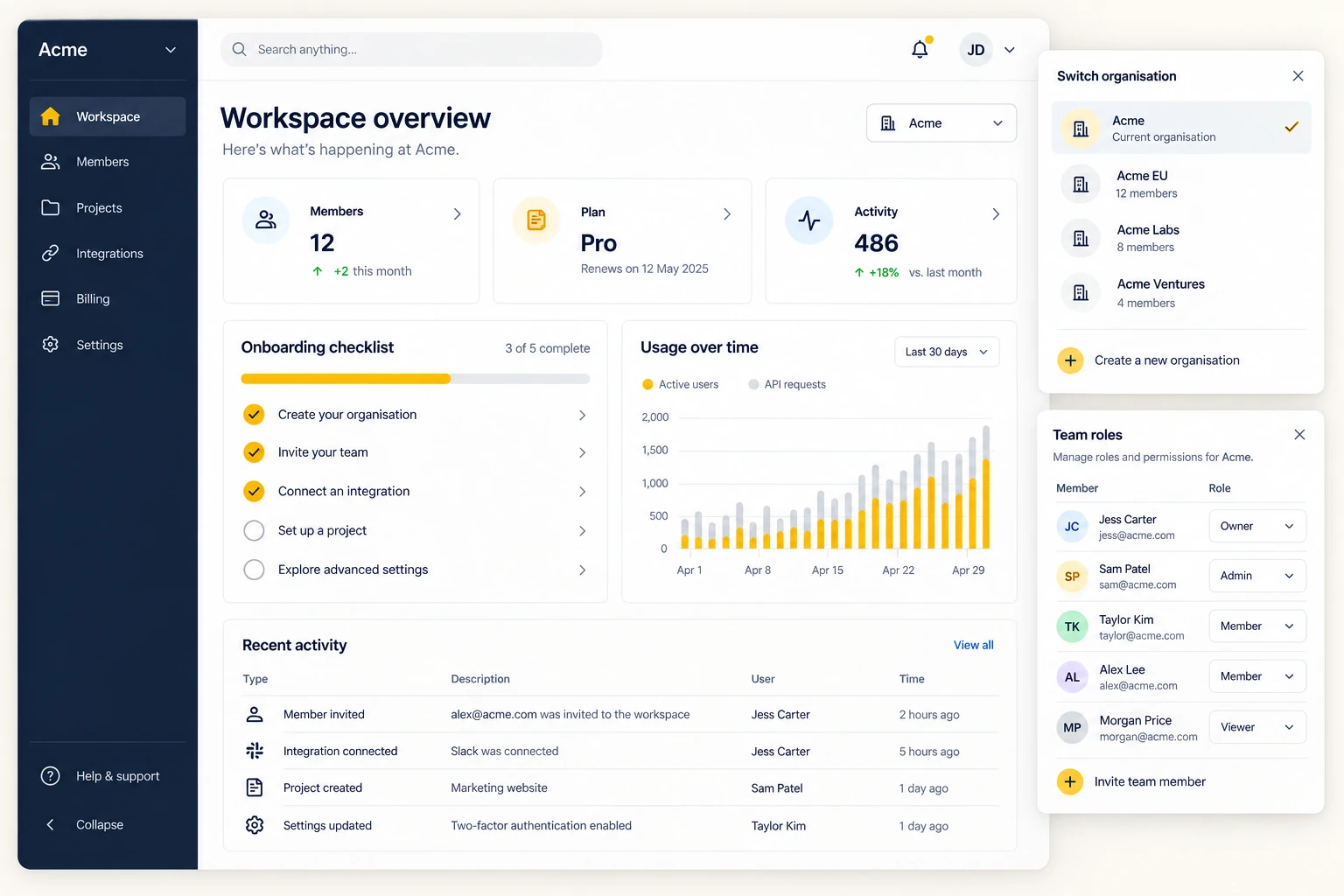
Give each customer their own workspace, users and access rules.
B2B SaaS development
Turn the way your industry works into a product customers can subscribe to.
We build business software with the workspaces, billing and administration you need to run the service.
The foundations of your service
The customer-facing workflow is only part of the product. We plan how accounts are set up, what each plan includes and how your team supports customers.
Give each customer their own workspace, users and access rules.
Define subscriptions, trials, invoices and cancellation rules.
Help new accounts complete setup and reach their first useful result.
Manage customer accounts, support requests and service settings.
Understand which features customers use and where they need help.
Connect the systems customers already use, where APIs permit.
Multi-tenant by design
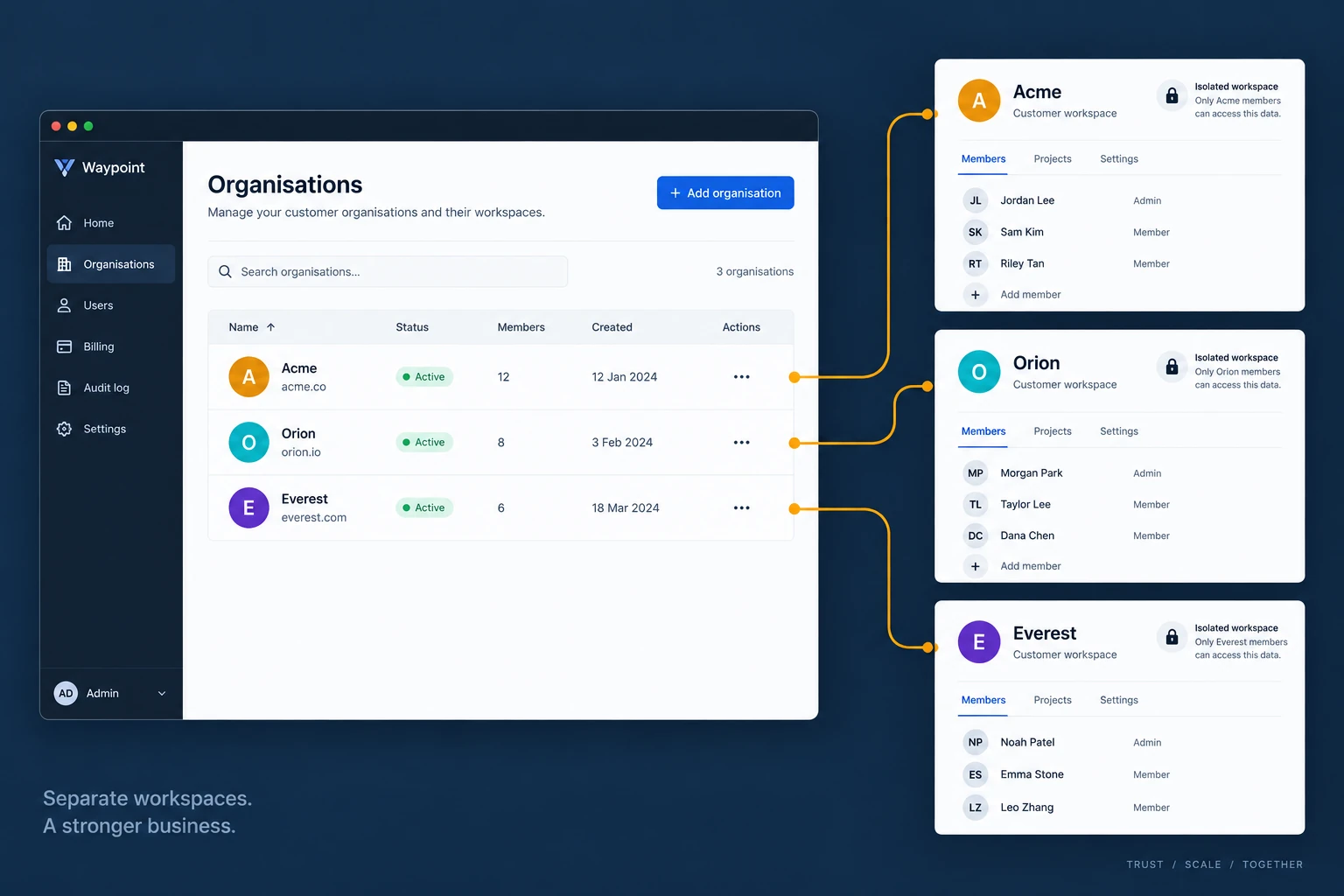
Separate customer records, permissions and settings. Choose the right isolation model for your customers and test access across account boundaries.
Start with a problem you know well. Build the workflow that makes your product useful enough to become part of the working day.
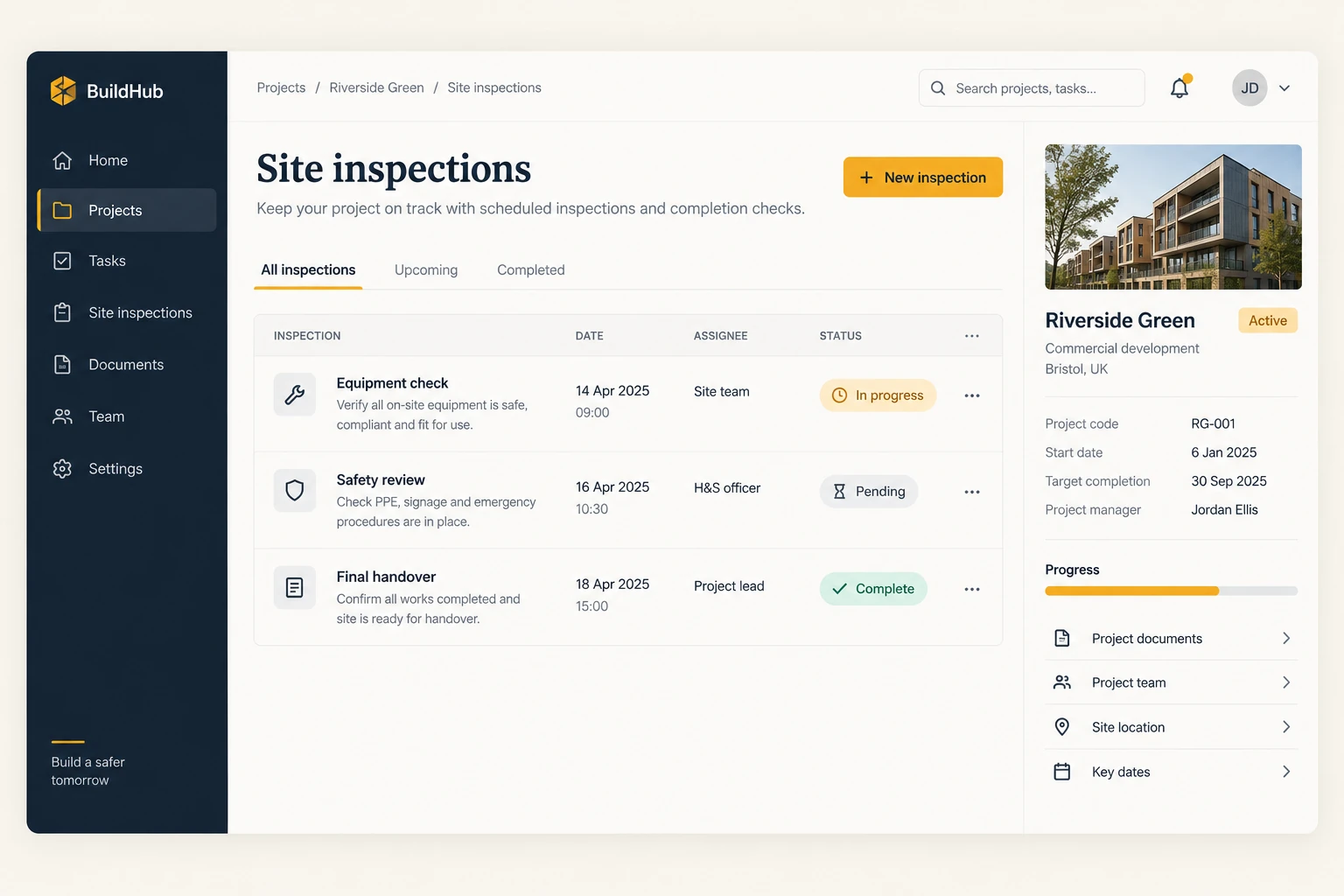
Replace sector-specific paperwork with a shared process for inspections, records and approvals.
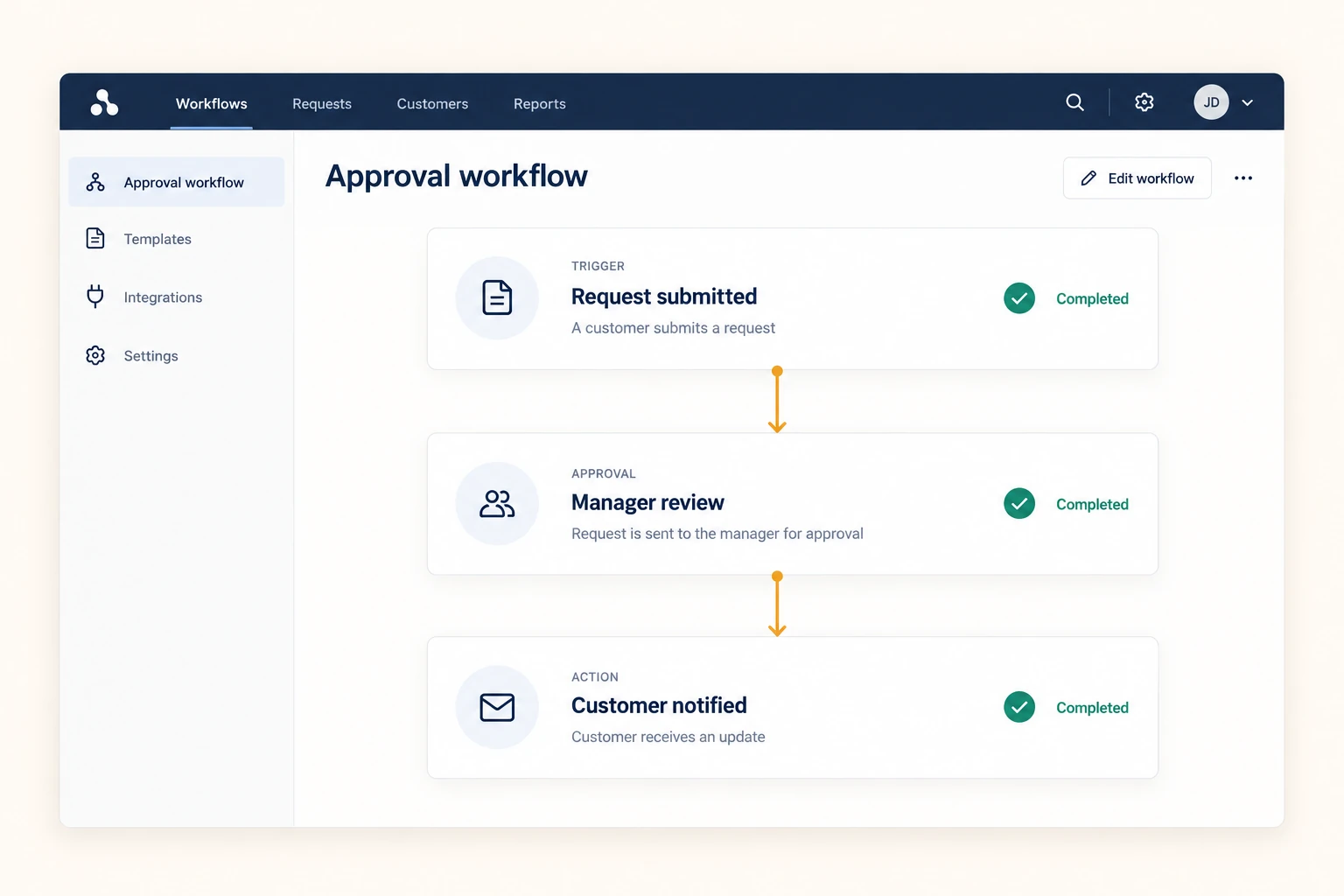
Route requests to the right person, track decisions and keep the next step moving.
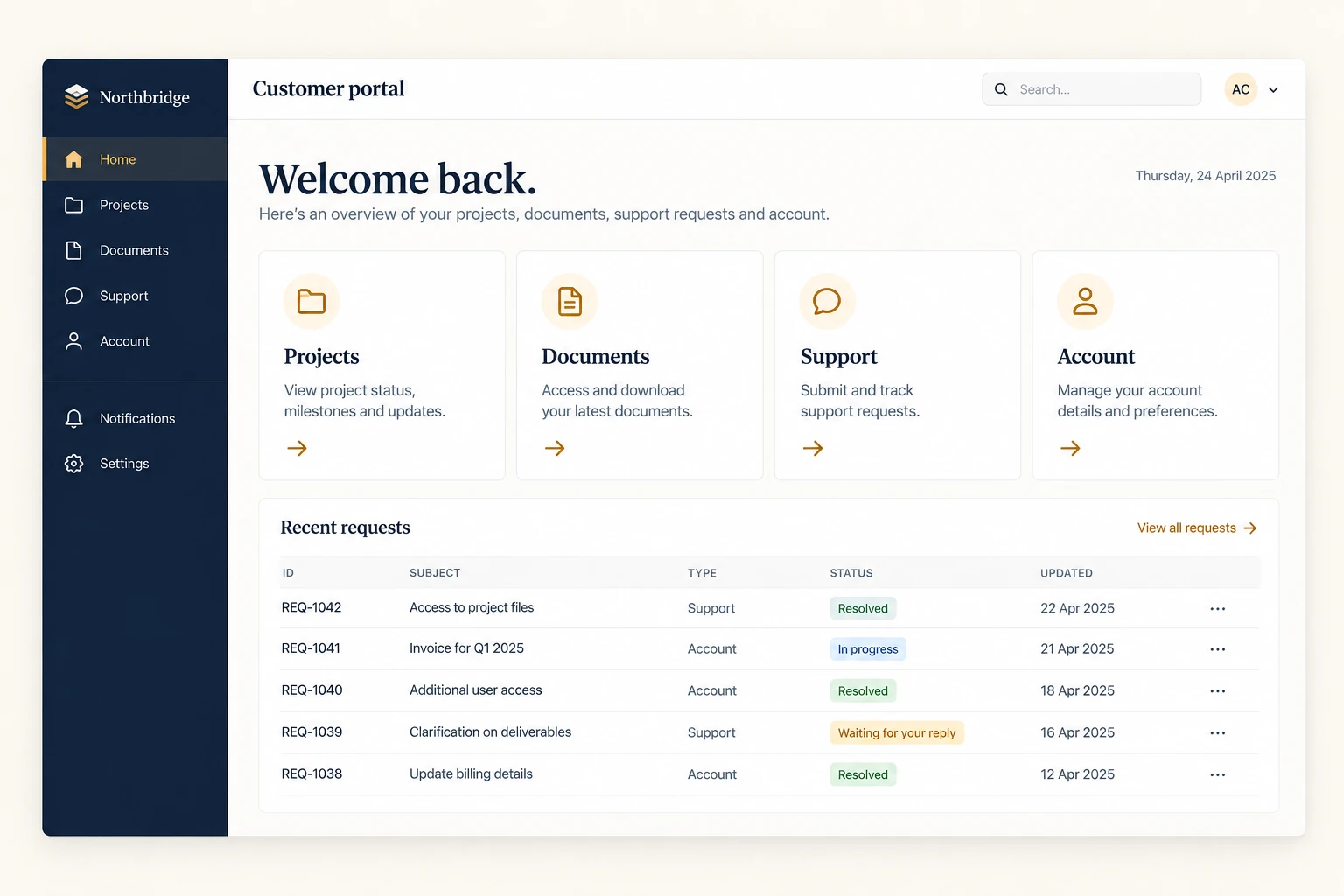
Let customers manage projects, retrieve documents and raise support requests.
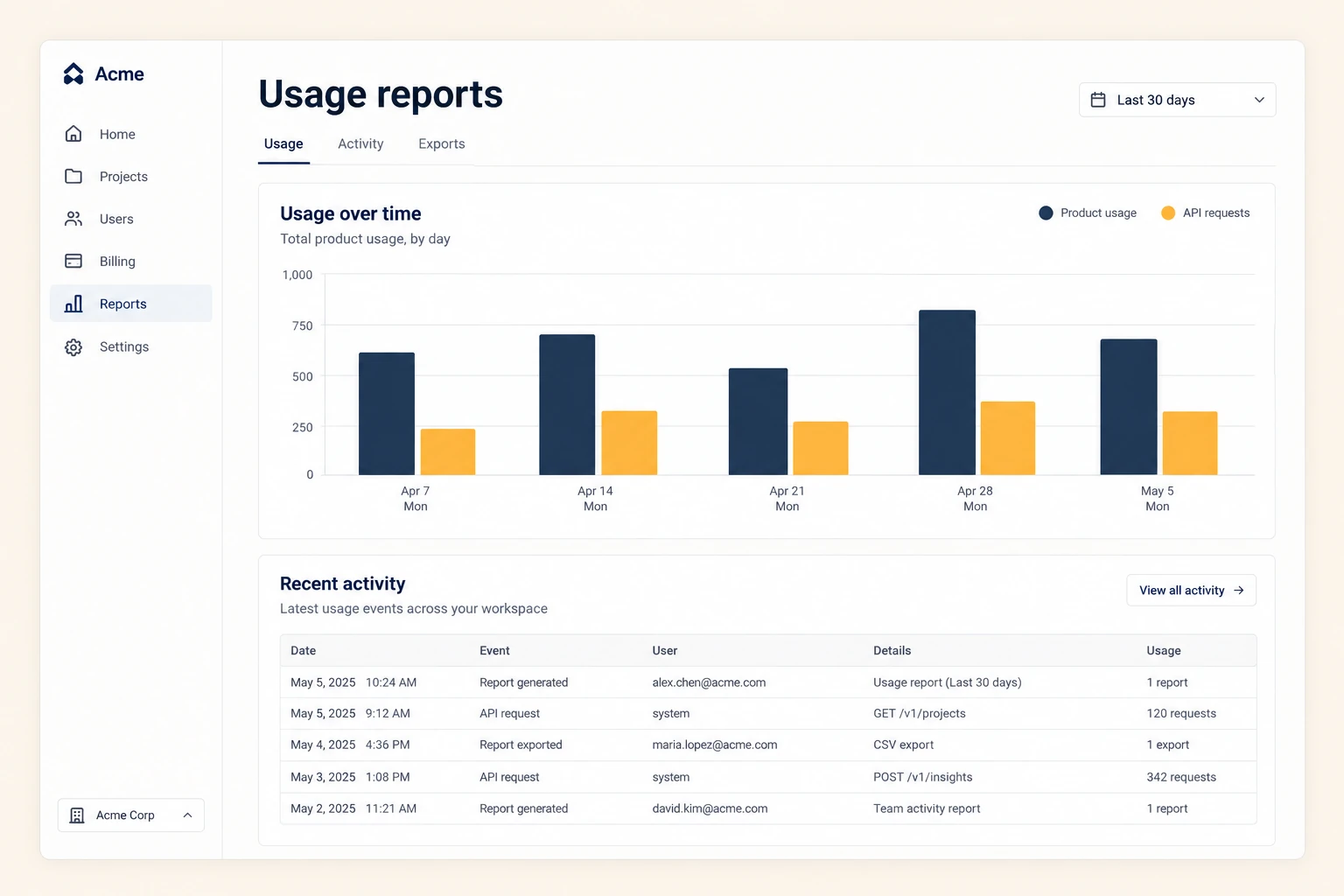
Bring operational records into reports that customers can filter and act on.

Your knowledge. A working product.
You bring the industry experience. We help turn it into a clear product scope, usable software and a manageable first release.
Give a defined customer group one valuable workflow they can use.
Use adoption, support questions and feedback to decide what comes next.
Add capability and capacity as the customer base and service needs grow.
From brief to first customers
Agree the first release, review working software and prepare your team to operate it.
Identify the buyer, core workflow and commercial assumptions.
Map the user journey, permissions and technical architecture.
Build in stages, with working software for your team to review.
Integrate billing and business tools; test exceptions and failures.
Prepare onboarding, monitoring, support and release checks.
Prioritise the next release using customer feedback and usage.
A first release should let one customer group complete a useful task and give your team the tools to operate the service. Include account and subscription work in that scope.
Define what belongs to an organisation, which users can invite colleagues and how tenant data is separated. Review support access alongside customer permissions.
Document trial, activation, renewal, failed payment and cancellation states. Decide what users can access at each stage and how billing records are reconciled.
Include onboarding, the core workflow and essential administration. List deferred features separately and agree backup, monitoring, support and account-export responsibilities.
A SaaS product serves multiple customer organisations, usually through subscriptions. It needs customer onboarding, account administration and a way to keep each customer's records separate. An internal application may share many features, but it does not necessarily need the same billing and tenant-management functions.
Yes. A useful first release gives a defined customer group one complete task they can use and evaluate. That usually includes sign-in, essential administration and the support or billing arrangements needed to serve them. Features for later releases can wait until customer feedback shows they are needed.
The design sets boundaries for each customer account, including its users, permissions and stored records. Access tests need to check those boundaries, not just whether a user can sign in. Some products may need separate deployments because of customer contracts or operating requirements.
Subscription plans, trials, upgrades and billing-provider integration can be included. We need to agree what happens when a payment fails, a customer changes plans or a subscription ends. The payment provider's capabilities and fees also affect the design.
SaaS platform projects at UNO start from RM30,000. The main factors are the core workflow, customer account structure, billing rules, integrations and expected usage, and onboarding and support tools also need a budget. We separate the first release from later features and discuss ongoing hosting, monitoring and maintenance.
Define the cancellation process before launch: when access stops, whether exports remain available and when records are removed. Billing status and data deletion should be separate decisions. Your service terms and customer agreements need to match the behaviour implemented in the product.
Estimate active users, busy periods, record volumes and demanding tasks such as bulk imports or reports. Test those tasks at the expected load before launch. Usage monitoring then helps identify when more capacity or changes to slow queries are needed, rather than relying on a user-count target alone.
Let's build what's next
Tell us who it is for, what it needs to do and where you want to start.